Replacement means taking the old run off, dealing with whatever is found behind it, and hanging a new system sized and pitched for the roof above it. The visible part is the gutter. The parts that decide whether it works are the pitch, the hangers and the downspouts.
Gutter Answers connects you with licensed local companies. We are not a contractor and do not perform the work ourselves.
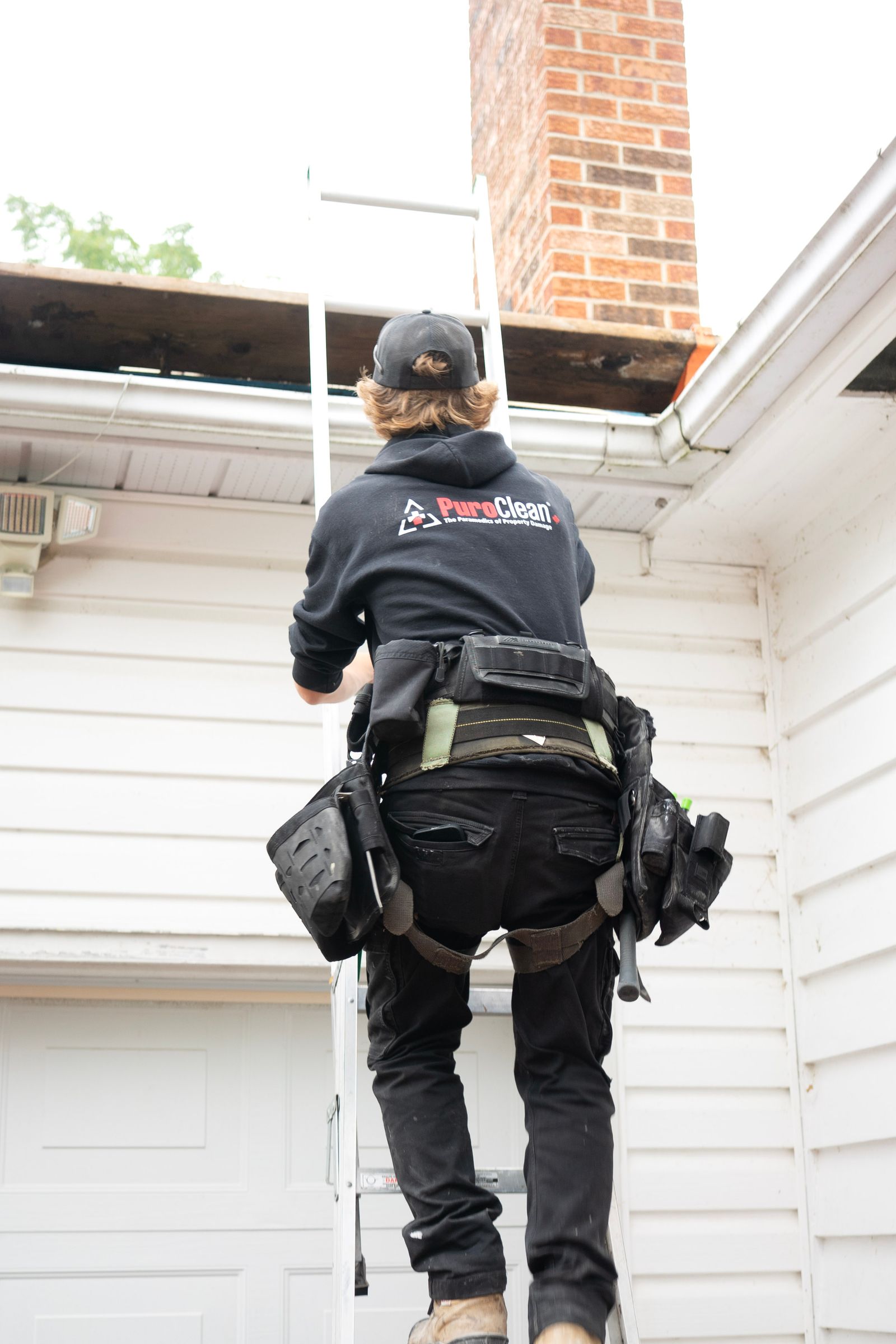
Knowing the vocabulary changes the conversation with a company, because it lets you ask about the components that matter rather than only the ones you can see from the driveway.
| Part | What it does |
|---|---|
| Gutter | The horizontal channel at the eave, usually K style or half round |
| Fascia | The board behind the gutter that everything is fixed to |
| Soffit | The underside of the overhang, next to the fascia |
| Hangers | The brackets holding the gutter, and their spacing |
| Outlet | The hole where the gutter feeds the downspout |
| Downspout | The vertical pipe carrying water down |
| Elbow | The angled sections routing a downspout around the building |
| Drip edge | Flashing directing roof water into the gutter, not behind it |
| Gutter apron | A wider drip edge, used where water tends to run back |
| End cap | Closes the end of a run |
Gutter replacement on a typical house is a short job, and most of it happens outside. Knowing the sequence helps you spot where a company is skipping a step.
The fascia inspection is the step that separates a thorough company from a fast one. It is the only moment the board is visible.
Sizing is a calculation, not a preference. It follows from the roof area draining into each run, how steep that roof is, and how hard it rains where you live. A run that is undersized will overflow no matter how clean it is.
The practical version of this: if a company sizes your system by looking at what was there before, ask what it is basing that on. The previous system may have been the reason you are replacing it.
Seamless is the common choice for a full replacement, because joints are where runs leak and seamless removes most of them. Sectional still has a place, particularly for short runs and for work you intend to do yourself.
| Seamless | Sectional | |
|---|---|---|
| Joints | Corners and outlets only | Along the whole run |
| Formed | On site from a coil | Pre cut lengths, joined up |
| Installed by | A company with the machine | Company or competent owner |
| Common failure | At corners | At any joint |
Ask for the specification, not just the price. A written spec is what you compare, and it is what you hold a company to if the finished job does not match what was described.
On a typical single family house it is usually a short job measured in hours rather than days, assuming the fascia is sound. Discovering rotten board is the thing most likely to extend it, because that is carpentry.
Not necessarily, but it is often the sensible moment. The drip edge sits under the roof covering, access is already set up, and a new roof over an old failing gutter run tends to mean going back up sooner than you would like.
K style has a flat back and a profiled front and is the common residential shape in the United States. Half round is a semicircular trough, often chosen on older or architecturally specific houses, and typically costs more to buy and hang.
It depends more on the material and the weather on the day than on the season. Sealants have temperature ranges they are designed to cure within, so ask the company how it handles that if you are booking in cold conditions.
It is worth asking the question, particularly if the old run overflowed. Larger profiles and additional downspouts exist precisely for roofs that shed more water than a standard system can carry.
Get Matched
Tell us what your gutters are doing and we will connect you with licensed companies working in your area. There is no obligation to hire anyone.